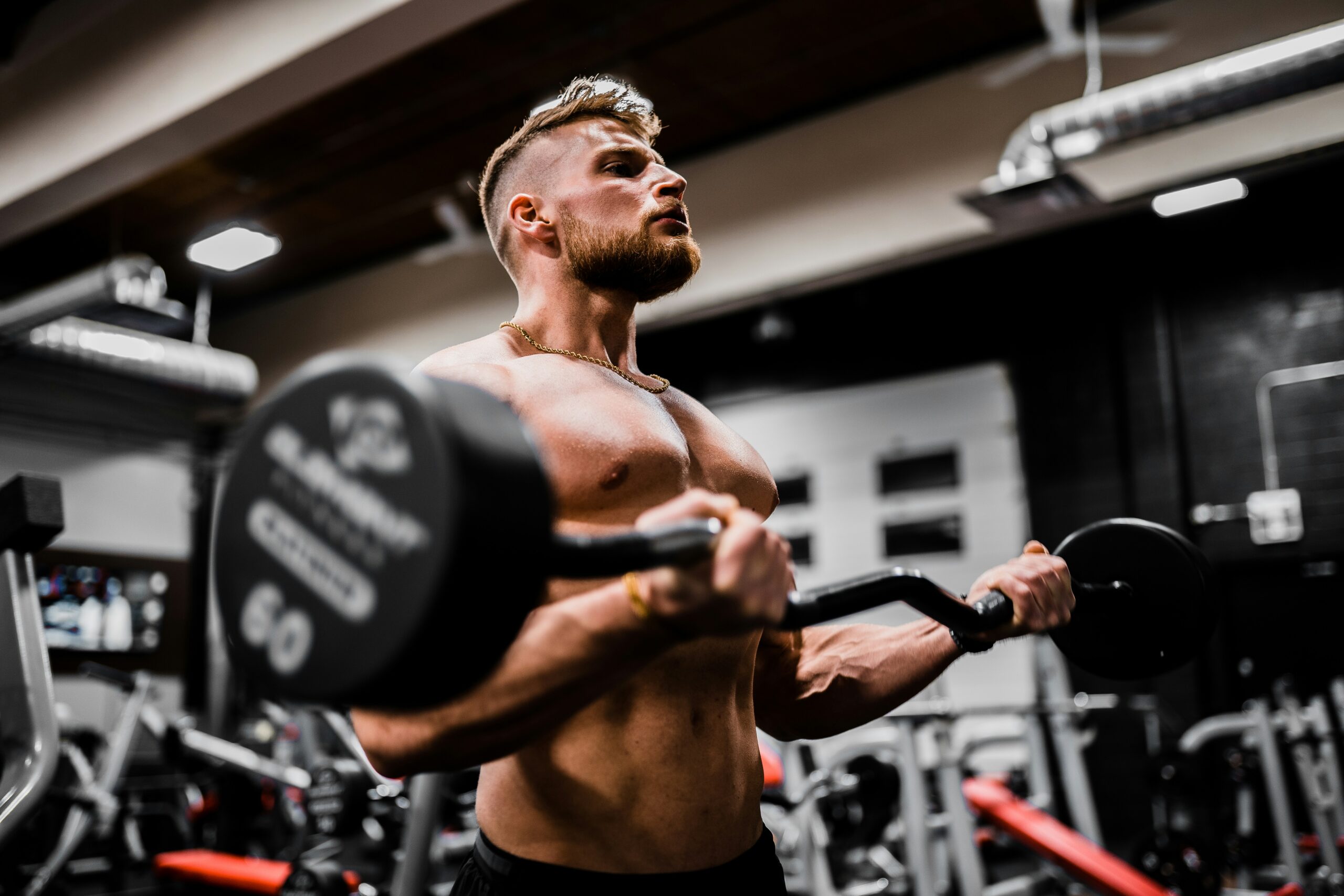
You’ve finally signed up for that gym membership, walked through the doors with determination, then stood paralyzed staring at rows of intimidating machines, free weights, and confident regulars who seem to know exactly what they’re doing. Twenty minutes later, you’ve awkwardly used three machines, questioned whether you’re doing anything correctly, and left feeling more confused than accomplished.
This experience destroys more fitness journeys than any other factor. The overwhelming complexity of modern gyms, combined with contradictory online advice, creates paralysis, preventing beginners from establishing the consistent training habits that actually transform physiques and health.
This comprehensive guide eliminates that confusion with a proven beginner workout plan designed specifically for UK and USA gym-goers starting their fitness journey in 2026. You’ll discover exactly which exercises to perform, how to structure your training week, proper form fundamentals, preventing injury, and realistic progression strategies that build strength and confidence simultaneously. No complicated routines requiring equipment that most gyms lack. No advanced techniques are inappropriate for beginners. Just straightforward, effective programming that works.
Why Most Beginner Workout Plans Fail
The fitness industry floods beginners with overcomplicated programmes designed for advanced lifters, creating unrealistic expectations and inevitable failure. Five-day body part splits training chest, back, shoulders, arms, and legs separately might work for experienced lifters, but prove completely inappropriate for novices.
Beginners lack the work capacity, movement proficiency, and recovery ability to train individual muscle groups with the volume these splits demand. Additionally, training muscles only once weekly wastes the rapid adaptation potential beginners possess, leaving substantial progress on the table.
Another common mistake involves programmes built around machines and isolation exercises rather than fundamental movement patterns. Whilst machines feel safer initially, they create artificial movement paths, preventing the development of coordination, stability, and functional strength that compound free weight exercises build.
The most damaging error is programmes lacking structured progression schemes. Many beginners perform the same weights, sets, and reps for months, wondering why their bodies aren’t changing despite consistent attendance. Without progressive overload, your body has zero reason to adapt beyond initial conditioning.
Effective beginner programming emphasizes full-body compound movements performed two to three times weekly, allowing frequent practice of fundamental patterns whilst providing adequate recovery. This approach maximizes the rapid strength gains beginners experience whilst building movement competency that supports long-term training success.
The Science Behind Beginner Strength Gains
Understanding why beginners progress differently from experienced lifters helps set realistic expectations and appreciate your unique advantages during this phase. Novice trainees experience rapid strength increases during initial months, often adding 5 to 10 pounds weekly to major lifts.
These dramatic improvements stem primarily from neurological adaptations rather than actual muscle growth initially. Your nervous system becomes more efficient at recruiting muscle fibres, coordinating movement patterns, and generating force. Essentially, you’re learning to access the strength you already possess but couldn’t utilize effectively.
Simultaneously, muscle protein synthesis rates in untrained individuals respond dramatically to resistance training stimulus. Your muscles are hypersensitive to training because they’ve never experienced systematic progressive resistance, creating conditions for rapid initial muscle building alongside neurological gains.
This beginner advantage window typically lasts six to twelve months, depending on training consistency, programming quality, and genetic factors. During this period, you can simultaneously build muscle, lose fat, and increase strength far more easily than you’ll ever experience again in your lifting career.
The tragedy is that most beginners waste this precious window on ineffective programming, inconsistent training, or inadequate nutrition. Optimizing these elements during your first year creates a foundation of muscle, strength, and movement competency that accelerates progress for years afterward.
Essential Equipment You’ll Find in UK and USA Gyms
Before diving into specific exercises, familiarize yourself with the equipment you’ll encounter in typical commercial gyms across the UK and the USA. Major chains, including PureGym, The Gym Group, LA Fitness, and Planet Fitness, stock similar fundamental equipment despite brand variations.
The barbell represents the most important tool for building strength and muscle. Standard Olympic barbells weigh 20 kilograms (45 pounds) unloaded. You’ll use these for squats, deadlifts, bench press, rows, and overhead pressing movements that form your programme foundation.
Dumbbells ranging from light pairs of 2 kilograms to heavy sets exceeding 50 kilograms per hand enable countless exercises with independent arm movement. Most gyms stock both fixed-weight dumbbells and adjustable versions where you select the desired weight.
Weight benches, including flat, incline, and adjustable variations, support pressing movements and provide elevated surfaces for rows and other exercises. Power racks or squat racks with safety bars allow safe barbell squatting and pressing without requiring spotters.
Cable machines with adjustable pulleys provide constant tension through exercise ranges of motion, excellent for pulling movements, core work, and isolation exercises. Most gyms feature both single-cable stations and dual-cable crossover units.
Cardio equipment, including treadmills, stationary bikes, rowing machines, and ellipticals support cardiovascular conditioning and warm-ups. Whilst not central to strength-focused beginner programmes, they serve valuable supplementary roles.
The Optimal Beginner Workout Structure
The most effective beginner routine trains your entire body two to three times weekly using compound exercises targeting multiple muscle groups simultaneously. This full-body approach maximizes training frequency on fundamental movements whilst managing fatigue intelligently.
A practical three-day implementation trains on Monday, Wednesday, and Friday with rest days between sessions. This provides 48 hours of recovery, allowing neurological and muscular adaptation whilst maintaining high enough frequency for rapid skill development on exercises.
Each workout includes six to seven exercises distributed across major movement patterns: a knee-dominant lower body exercise, a hip-dominant lower body exercise, a horizontal push, a horizontal pull, a vertical push or pull, and core work. This ensures balanced development without overwhelming volume.
Total working sets per session should range from 12 to 18, with 2 to 3 sets per exercise. This volume proves sufficient for adaptation without creating excessive fatigue that compromises recovery or subsequent session quality. Beginners should err toward lower volumes initially.
Workout duration typically runs 45 to 60 minutes, including warm-up and rest periods. Longer sessions often indicate excessive volume, poor focus, or overly long rest periods. Efficiency matters, particularly for busy professionals fitting training around work and family commitments.
The Essential Beginner Exercise Selection
Goblet squats serve as the ideal entry point for lower body training, teaching proper squat mechanics whilst allowing progressive loading. Hold a dumbbell vertically at chest height, squat until your elbows touch your inner knees, then drive back to standing. Start with 10 to 15 kilograms, performing 3 sets of 10 to 12 repetitions.
This variation builds quadriceps, glutes, and core strength whilst the front-loaded weight naturally encourages upright torso position, preventing the forward lean that plagues back squat beginners. Progress by adding weight in 2.5-kilogram increments when you can complete all prescribed sets and reps with excellent form.
Dumbbell Romanian deadlifts develop your posterior chain, including hamstrings, glutes, and lower back, through the hip-hinge movement pattern. Hold dumbbells at arm’s length, push your hips backward whilst maintaining a slight knee bend, lower the weights toward your feet until you feel hamstring stretch, then drive your hips forward, returning to standing.
Begin with 10 to 12 kilograms per hand for 3 sets of 10 to 12 repetitions. This teaches the fundamental hinge pattern essential for deadlifting whilst building posterior chain strength that supports overall lower body development and protects your spine during daily activities.
Dumbbell bench press builds chest, front deltoids, and triceps whilst allowing independent arm movement that barbells cannot provide. Lie on a flat bench, press dumbbells from chest level to arms extended overhead, lower under control back to chest. Start conservatively with 10 to 15 kilograms per hand for 3 sets of 8 to 12 repetitions.
The dumbbell variation proves superior for beginners compared to barbell bench pressing because it allows natural arm paths, accommodating individual shoulder anatomy whilst building balanced strength between arms. Progress gradually, adding weight only when current loads feel genuinely manageable for all prescribed repetitions.
Dumbbell rows develop back thickness, rear deltoids, and biceps through horizontal pulling. Place your left knee and hand on a bench for support, hold a dumbbell in your right hand, pull the weight toward your hip whilst keeping your elbow close to your body, and lower under control. Complete all reps on one side before switching.
Use 12 to 15 kilograms initially for 3 sets of 10 to 12 repetitions per arm. Focus on pulling your elbow back rather than simply curling the weight with your bicep. This back engagement creates the muscle-building stimulus you’re seeking whilst developing the pulling strength that balances pressing work.
Lat pulldowns train vertical pulling patterns, developing lat width and overall back musculature. Sit at a lat pulldown machine, grip the bar slightly wider than shoulder width, pull the bar toward your upper chest whilst keeping your torso relatively upright, and control the weight back to the starting position.
Begin with approximately 30 to 40 kilograms for 3 sets of 10 to 12 repetitions. This builds the strength, eventually enabling bodyweight pull-ups whilst teaching proper scapular movement and lat engagement, which many beginners lack initially.
Overhead dumbbell press builds shoulder strength and development whilst demanding core stability. Sit on a bench with back support or stand, hold dumbbells at shoulder height, press overhead until arms fully extend, and lower back to shoulders. Start with 8 to 12 kilograms per hand for 3 sets of 8 to 12 repetitions.
This movement develops the deltoids, creating shoulder width and definition whilst building pressing strength that transfers to numerous sports and daily activities. The standing variation increases core demand but requires more technique, making seated pressing preferable initially.
Planks develop core strength and stability essential for all other exercises and daily function. Support your bodyweight on your forearms and toes, maintaining a straight line from head to heels. Hold this position without allowing your hips to sag. Begin with 3 sets of 20 to 30 seconds, progressively increasing duration as strength develops.
Strong core muscles protect your spine during loaded exercises whilst improving force transfer between the upper and lower body. Planks build this foundational strength more safely than dynamic ab exercises that can strain the lower back when performed with poor form.
Your Complete Three-Day Beginner Programme
Workout A begins with goblet squats for 3 sets of 10 to 12 reps, followed by dumbbell bench press for 3 sets of 8 to 12 reps, dumbbell rows for 3 sets of 10 to 12 reps per arm, lat pulldowns for 3 sets of 10 to 12 reps, dumbbell Romanian deadlifts for 2 sets of 10 to 12 reps, and planks for 3 sets of 20 to 40 seconds.
Workout B includes goblet squats for 3 sets of 10 to 12 reps, overhead dumbbell press for 3 sets of 8 to 12 reps, dumbbell rows for 3 sets of 10 to 12 reps per arm, dumbbell bench press for 3 sets of 8 to 12 reps, dumbbell Romanian deadlifts for 2 sets of 10 to 12 reps, and planks for 3 sets of 20 to 40 seconds.
This alternating structure ensures you train all movement patterns multiple times weekly, whilst providing exercise variety, preventing boredom. The slight variation between sessions allows practising fundamental movements without an identical workout,s creating mental fatigue.
Rest periods between sets should run 90 to 120 seconds for compound movements, allowing sufficient recovery for quality performance without unnecessarily extending workout duration. Core work requires only 30 to 60 seconds of rest between plank sets.
Warm up before working sets with 5 to 10 minutes of light cardio, elevating heart rate and core temperature, followed by movement-specific warm-up sets using lighter weights. Never start with your working weight cold, as this increases injury risk whilst compromising performance.
Progressive Overload Strategy for Beginners
Your primary goal during the initial months is adding weight or repetitions to exercises session by session. This progressive overload creates the stimulus, forcing your body to adapt through increased strength and muscle development.
The simplest progression method involves adding one repetition to your sets each workout. On Monday, you completed 3 sets of 10 reps on goblet squats with 15 kilograms. On Wednesday, attempt 3 sets of 11 reps. Continue adding reps until you achieve 3 sets of 12 reps, then increase the weight by the smallest available increment and return to 10 reps.
This double progression approach works excellently for beginners, creating manageable advancement while maintaining proper form. The gradual rep increases feel achievable rather than overwhelming, building confidence alongside strength.
Track every workout in a notebook or smartphone app, recording exercises, weights, sets, and reps completed. This objective data reveals whether you’re actually progressing or merely maintaining current performance levels. You cannot manage what you don’t measure.
Expect to add weight to major exercises weekly during the initial months. Lower body movements typically progress faster than the upper body due to larger muscle groups involved. A beginner might add 2.5 to 5 kilograms weekly to goblet squats, whilst upper body movements increase more gradually.
As you advance, progression slows naturally. This is expected and normal. The key is continuous improvement over months and years, not maintaining beginner rates indefinitely. Trust the process even when progress feels frustratingly slow.
Common Beginner Mistakes That Derail Progress
The most damaging error is ego lifting with weights too heavy for proper form. Using momentum, partial ranges of motion, or compensatory movement patterns to lift heavier loads limits muscle tension, increases injury risk, and builds poor movement habits that plague your training for years.
Leave your ego at the door. Focus on controlling weights through full ranges of motion with excellent form rather than impressing strangers with numbers they neither notice nor care about. Building proper movement patterns now pays dividends for decades.
Another critical mistake is programme hopping, switching routines every few weeks when you see something different online. You cannot assess a programme’s effectiveness in two weeks. Commit to your plan for a minimum of eight to twelve weeks before evaluating results and considering changes.
Many beginners also neglect nutrition, expecting training alone to transform their physiques. Exercise creates the stimulus for change, but nutrition provides the building blocks for muscle growth and energy deficit for fat loss. Both elements must align for optimal results.
Inadequate sleep sabotages progress despite perfect training and nutrition. Your muscles grow and adapt during recovery, particularly during deep sleep. Prioritize seven to nine hours nightly as non-negotiable for maximizing your training investment.
Your Path to Gym Confidence and Results
Starting your gym journey feels intimidating, but remember that every experienced lifter once stood exactly where you are now, uncertain and overwhelmed by unfamiliar equipment and movements. The difference between them and people who quit is simply that they started and persisted through initial awkwardness.
Focus on mastering fundamental movement patterns rather than chasing advanced techniques or complicated programmes inappropriate for your experience level. The exercises outlined here build comprehensive strength, muscle, and movement competency that support whatever fitness goals you pursue long-term.
Commit to your three-day programme for a minimum of twelve weeks, progressively adding weight or reps to exercises whilst maintaining excellent form. Track your workouts, eat adequate protein supporting muscle development, sleep sufficiently for recovery, and trust the process even when progress feels slow.
Consider working with a qualified personal trainer for a few sessions, learning proper exercise technique if the budget allows. This small investment prevents injury whilst accelerating your learning curve, making it one of the most valuable expenditures for long-term training success.
The gym members you admire achieved their results through years of consistent training, not through secret exercises or genetic superiority. They simply showed up repeatedly, followed intelligent programming, and trusted that small progressive improvements would compound into dramatic transformations over time. That same success is available to you through the dedicated implementation of these beginner principles, one workout at a time.